
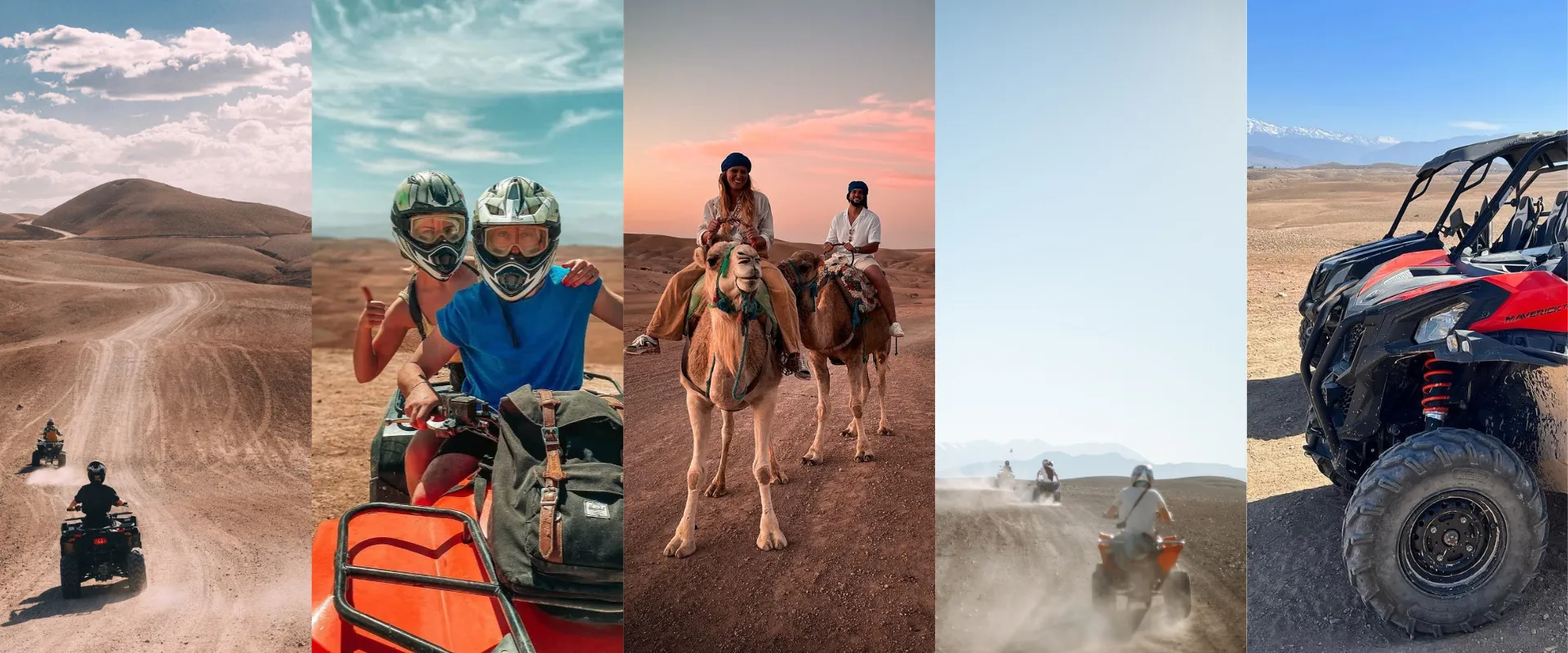
Agafay is a year-round destination, which is a genuine advantage over the Sahara — but that does not mean every month feels the same. The plateau sits at around 700 metres, high enough to stay bearable in summer and cool enough at night to need a jacket in January. Here is what each season actually delivers for a quad ride, and why the hour you book matters as much as the month.
Spring (March to May): the Best of the Year
If you can choose, choose spring. Daytime temperatures sit between 20 and 28°C, the light is clean, and the winter rains leave a thin green wash across the hills that disappears by June. The High Atlas is still snow-capped behind you, which is the single best backdrop Agafay ever offers — photographers should read our Agafay photography guide before coming.
April is the peak. It is also the busiest month, so book a few days ahead rather than on the morning.
Autumn (September to November): the Quiet Alternative
Autumn is spring's less crowded twin. The heat breaks in mid-September, temperatures settle back into the low twenties, and the plateau takes on deep gold tones in the late afternoon. There is no green, but the light is arguably better than in spring.
October is our own favourite month. Fewer groups, warm ground, and sunset arriving at a civilised hour — ideal if you want to combine a ride with sunset in the Agafay Desert or stay on for dinner under the stars.
Summer (June to August): Ride Early or Ride Late
Summer is entirely workable, but only at the right hours. Midday can reach 38-40°C on the plateau, and nobody enjoys a quad ride in that. We therefore run summer departures early in the morning (from around 8am) or from 5pm onwards.
The late-afternoon slot is the one to take. You get the heat coming off the stone, the sun dropping behind the Atlas, and temperatures falling into the pleasant high twenties by the time you finish. Drink more water than you think you need, and see what to wear for the summer kit list.
Winter (December to February): Sunny and Empty
Winter is underrated here. Days are typically sunny with highs of 15 to 22°C — genuinely comfortable riding weather — and the desert is at its emptiest. The catch is the morning: it can be 4-6°C at 8am, and wind chill on a quad makes it feel colder still.
Book the late-morning or early-afternoon departure in winter and bring a proper jacket and gloves. The reward is crystalline visibility; on a clear January day you can see the full Atlas range. It is also the best season for stargazing, with the longest and clearest nights.
Month by Month, Briefly
— January-February: cold mornings, brilliant light, very few people.
— March-May: the sweet spot. Mild, green-tinged, snowy Atlas.
— June-August: early or late departures only. Sunset rides excel.
— September-October: heat gone, golden light, quieter than spring.
— November: cooler, occasional rain, excellent value.
— December: crisp, sunny, busy over the holidays.
Detailed temperature and rainfall figures are in the Agafay Desert weather guide.
The Hour Matters More Than the Month
This is the part most people get wrong. A midday ride in October can be less pleasant than a 6pm ride in July. Across the whole year, the two best windows are 8-10am and the two hours before sunset — the light is low, the temperature is moderate, and the dust hangs golden rather than white.
Rain is barely a factor: Agafay gets around 250mm a year, almost all of it between November and March, and it usually falls as short showers rather than washouts. We only cancel for genuine storms.
Booking Around the Season
Whatever the month, the ride itself is the same two hours on the same plateau — our Agafay quad tour runs year-round, as does the quad and camel combo. What changes is the departure time we recommend, and we will suggest it when you book.
If you are building a longer trip, the full-day itinerary works best in spring and autumn, while a weekend with a night at a camp is most rewarding from March to May. First time on a quad? Start with our beginner tips.